Posts

Bighorn sheep-oh, what beautiful brown eyes you have

Image
I spotted this small herd of Bighorn sheep in the Bighorn Sheep Canyon west of Canon City this past week. Though their coats are often pretty rugged they have such beautiful brown eyes. A little further down the canyon I spotted another small herd of Bighorn Sheep showing off, and practicing, their skills at traversing steep locations. SeEtta

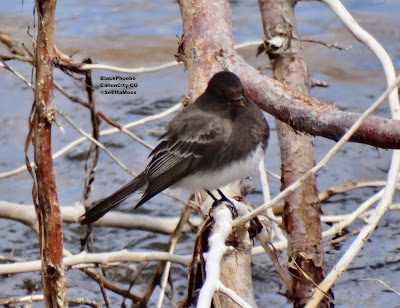
One of a number of Black Phoebes in the Canon City area

Image
Black Phoebes are pairing up around the Canon City area including this particular bird. So far I have found 2 in Florence and 6 in and near Canon City. SeEtta

American Dipper feeding on shore

Image
On Saturday I located a total of 4 American Dippers at three locations along the Arkansas River in the Bighorn Sheep Canyon west of Canon City plus two nests at two locations. The photo just below shows one of the dipper nests. I videoed this American Dipper as it fed on the multiple insects on the shore. While this species is best known for feeding in and under rapidly moving water there had been a good caddis hatch so seems likely this bird as well as it's mate, that I also watched feeding on the shore, were enjoying the caddis flies. SeEtta

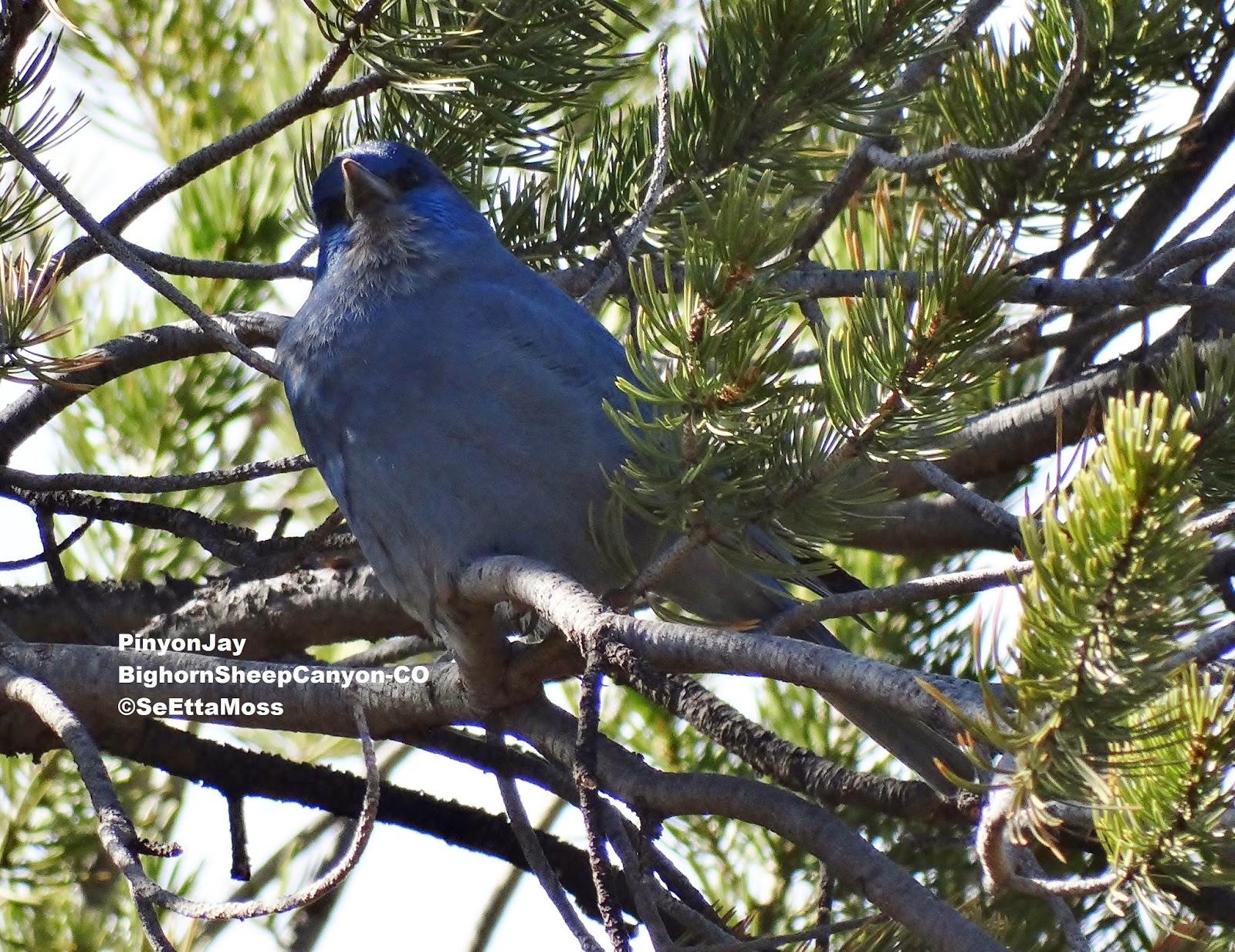
Pinyon Jays with one collecting nesting material

Image
After birding with some friends today I went on to do some birding in the Bighorn Sheep Canyon west of Canon City. I spotted 2 Pinyon Jays that I followed by car for a ways then unable to drive where they flew I went on to check on American Dippers. When I drove back that way I refound the jays in some pinyon juniper. I watched from my car as some unknown number of Pinyon Jays flew about and called. I wondered if this could be a nesting area. Though I have found Pinyon Jay creches before I have never found a nesting area. I walked in and found this bird perched rather quietly. It allowed me to approach on foot most unusually close, only about 40 feet away when it moved further inside the tree. Then I spotted the bird in the photo below walking further away, maybe a 100 feet. As I watched it pulled grasses with it's bill, apparently gathering nesting material. Sorry the photo isn't sharper but it was pretty distant for this handheld photo, but you can see the ...

Black Phoebe casting a pellet

Image
I found this Black Phoebe last week on the property of the Fremont County Sewer District near their sewer plant where I have seen Black Phoebes for several years. As I watched the bird tossed it's head downward and I caught it in the act of casting a pellet, something more often associated with owls. However Black Phoebes and other birds that eat insects or other live prey whole do this to get rid of the digestible parts. Though a real sharp photo below, it does show the pellet and it's size relative to the bird. Casting of pellets by Black Phoebes is noted in Birds of North America (p. 6). I have only seen a Black Phoebe cast a pellet on one previous occasion. I have previously blogged a sequence of photos of a Scissor-tailed Flycatcher (and sharper than this one) as it cast a pellet. SeEtta

Harlan's Red-tailed Hawk riding same thermal as the Sandhill Crane family

Image
Interestingly the Harlan's Hawk I posted about just below apparently jumped on the same thermal as the Sandhill Crane family as I watched them all rising higher and higher sometimes in the same view as in this photos. SeEtta

Another Harlan's Red-tailed Hawk

Image
This is a late post as I actually spotted this Harlan's Red-tailed Hawk when I was watching the Sandhill Crane family in Canon City right before they took off to continue their migration This hawk was perched quite a distance away, about 400 feet away, so the perched photos have been severely cropped to see the field marks--black with a little white on breast and around forehead plus undertail. This hawk took off and apparently got on a thermal to rise high in the sky showing off a classic Harlan's underside pattern. SeEtta